

News
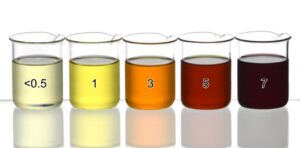
The ASTM D-1500 color scale is a critical standard in the petrochemical industry, used to determine the color of petroleum products such as lubricating oils, heating oils, diesel fuel oils and petroleum waxes. This scale is the principal quality measurement used for the purchase and sale of partially refined oils. As an oil is refined,…
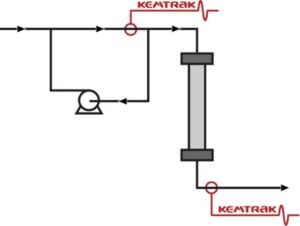
Chromatography is a fundamental analytical technique used to separate mixtures into their individual components. It is widely used in the chemical and pharmaceutical industries and crucial for various stages of drug development, production, and quality control. How chromatography works 1. The sample mixture to be separated is dissolved in a fluid (liquid or gas) called the…

We often get the question: How can I be sure to get the correct Hazen color value if calibration standards only go up to 500 PCU and my solution’s color is well above that? Well, absorbance is a function of concentration and thus correlates to color, according to Beer Lamberts law: Absorbance ≃ concentration As…

Did you know that acetone has been detected in the interstellar medium (the space between stars), proving that organic molecules are present even in the vastness of space? 🌌 On Earth, high-purity acetone is essential for various applications, including pharmaceuticals and electronics. It’s also crucial in the production of total hip and knee replacements, as…
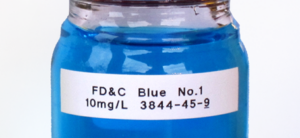
#24 Weekly Application: Brilliant Blue – leak detection in heat exchangers Brilliant Blue FCF is a synthetic dye commonly used in various industries, including food, pharmaceutical, and chemical. It is used in heat exchanger and serves a specific technical purpose – leak detection. A water-soluble dye, it is known for its vibrant blue color. By…

Ever wondered how to ensure the quality and consistency of your petroleum products in an efficient way? 😊 The Saybolt color test is a crucial measure of the color of refined petroleum products and lubricating oils, indicating their purity and quality. ⚗️ Traditional methods of Saybolt color measurement can be time-consuming and subjective. The Kemtrak…
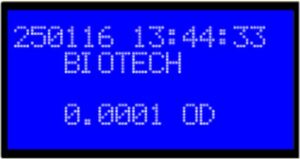
Optical Density (OD) is a measurement used in biotech to quantify DNA, RNA, and proteins. But what is it exactly? In simple terms, OD is the amount of light absorbed at a specific wavelength divided by the distance the light travels through the sample (optical pathlength or OPL) in centimeters. It represents the absorption you…

Did you know? During the early stages of shampoo in Europe, English hair stylists boiled shaved soap in water and added herbs to give the hair shine and fragrance. Commercially made shampoo was available from the turn of the 20th century👴 Modern shampoos offer cleansing, conditioning, and some even have medicinal benefits. Evaluating these products involves various quality control tests, including turbidity measurement 🧴 Turbidity,…

The units used in turbidity measurements can be confusing… Here is a guide: NTU stands for “Nephelometric Turbidity Unit” and signifies that the instrument is measuring scattered light from the sample at a 90-degree angle from the incident light in accordance with USEPA…

Discover how the Kemtrak TC007 turbidity analyzer revolutionizes crystallization process monitoring. In this video we demonstrate the power of real-time turbidity measurement in optimizing crystallization processes. By precisely pinpointing the nucleation point, the TC007 ensures improved yields, reduced solvent consumption and enhanced batch-to-batch consistency. Through a sodium acetate crystallization, you’ll see how the TC007, paired…