

Blog

Rising rack density is pushing data centers toward liquid cooling, and glycol-based coolant now runs through a larger share of a facility’s loops, heat exchangers, and building envelope than it did a few years ago. Glycol leak detection in this environment depends on continuous, inline monitoring of dye markers added to the coolant, since the…
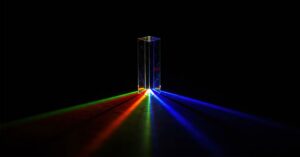
The Beer-Lambert Law describes the linear relationship between concentration and the absorption of light in a sample: absorbance is directly proportional to the concentration of the absorbing substance and to the distance the light travels through it (the optical pathlength). This proportionality is what allows concentration to be determined directly from an optical measurement. For…

As biomanufacturing moves toward higher-titer processes and concentrated mAb formulations, the measurement tools standard in most facilities are reaching their limits. Fixed-wavelength UV photometers — workhorses of chromatography and downstream processing for decades — are not designed for the concentration ranges modern bioprocessing now demands. Knowing where and why those limitations occur is the first…

Ethanol in water Methanol in water Acetone in water Sulfuric acid in water Sodium hydroxide in water IPA in water Phenol in water TEG in water Ammonia in water

The Minamata disaster in Japan stands as one of the most devastating examples of industrial pollution. For over three decades, a chemical factory discharged mercury into Minamata Bay, contaminating seafood and poisoning thousands. Victims suffered from neurological damage, birth defects, and in many cases, death. The tragedy led to the identification of Minamata disease, a…

In server halls, efficient cooling is critical for optimal equipment performance. Many cooling and heat exchange systems use ethylene glycol – a substance that is highly toxic if leaked. – To detect leaks quickly, dyes such as Fluorescein and Brilliant Blue are commonly added. These can be measured at extremely low concentrations, from ppb to…

We often get the question: How can I be sure to get the correct Hazen color value if calibration standards only go up to 500 PCU and my solution’s color is well above that? Well, absorbance is a function of concentration and thus correlates to color, according to Beer Lamberts law: Absorbance ≃ concentration As…
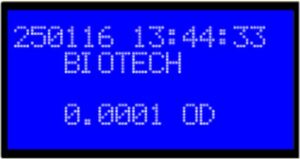
Optical Density (OD) is a measurement used in biotech to quantify DNA, RNA, and proteins. But what is it exactly? In simple terms, OD is the amount of light absorbed at a specific wavelength divided by the distance the light travels through the sample (optical pathlength or OPL) in centimeters. It represents the absorption you…

The units used in turbidity measurements can be confusing… Here is a guide: NTU stands for “Nephelometric Turbidity Unit” and signifies that the instrument is measuring scattered light from the sample at a 90-degree angle from the incident light in accordance with USEPA Method 180.1 (USA). FNU stands for “Formazin Nephelometric Units” and also signifies that…